Case study 2 of 3
Project Orca: finding growth in a crowded market
When ad costs in merge games started eating our margins, the obvious answer was to buy players more efficiently. I thought the real problem was that our game didn’t give its most valuable players enough to spend on.
- Role
- Founder and CEO, Skunkworks
- Period
- 2022
- Released as
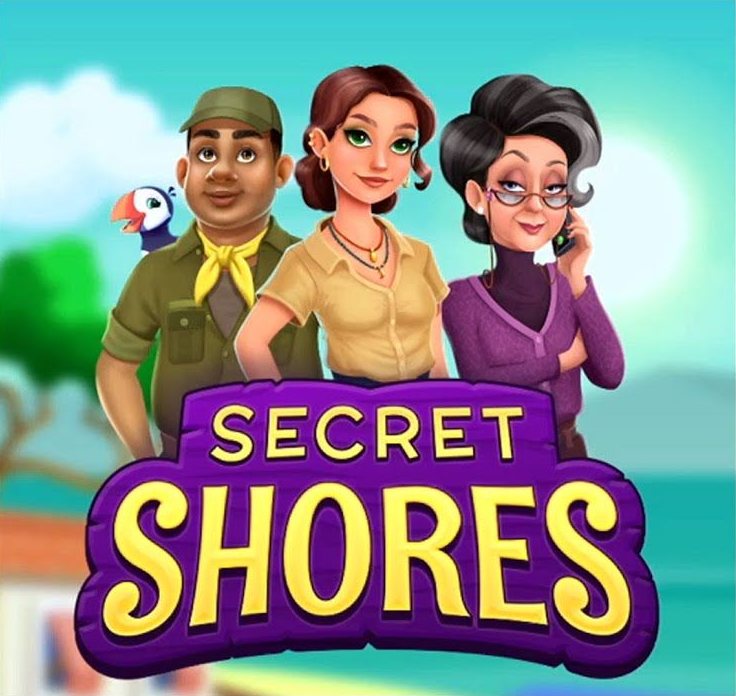
- Secret Shores
- Live test
- 11 weeks after first code
Background
Merge-2 was a new and fiercely competitive genre. Merge Friends launched worldwide in spring 2021 and made €1m within its first few weeks, but within a couple of months 20 to 30 rival games were bidding for the same players on the same ad networks, and the cost of each install rose sharply.
Merge Friends kept a large, high-spending audience but stopped growing. Ad costs were out of control, and adding features or live events meant rebuilding large parts of the game.
The problem
The real issue was how much each player spent, not how much we spent on ads. Merge Friends made about $4 per download; Merge Mansion, the market leader, about $8. That gap meant Merge Mansion could outbid us for the same player and still make money. Merge-3 games such as Merge Dragons and EverMerge made far more again.
The idea
If the best player in a $4 merge-2 game was the same person as the best player in a $38 merge-3 game, the gap wasn’t about her. It was about what the games gave her to do.
Data from Solsten across three groups (our own players, merge-2 players and merge-3 players) showed the same high-value player type in all three. Our own data showed she spent about three times as long in merge-2 games as in merge-3, even though merge-3 games earned far more from her. She was already playing; she just wasn’t being given a reason to spend.
- 45% of players like her named matching and merging as their favourite type of game.
- She wants visible progress and to feel productive.
- She wants control and creativity, not a single fixed path.
- She likes playing with others, but not depending on them.
- She’s drawn to “realistic fantasy”: travel, a garden of her own, rescuing animals.
The bet: a merge-2 game with real depth and room to grow could lead not just merge-2, but the whole merge genre.
My role
As founder and CEO, I led the search for a better route to growth and pushed back on the idea that cheaper ads were the answer. Project Orca was our first full run of a repeatable process: find the opportunity, understand it, test it, then build.
The research, concept work, testing and build were done by the Skunkworks team.
What we did
From player profile to game concept
The team looked at the themes and mechanics of the games she already played, then brainstormed in three layers: game ideas based on audience data, more than 60 settings and more than 60 player fantasies. Seventeen concepts were worked up in detail, with their risks and costs written down alongside their strengths.
Each was scored against nine criteria, from audience fit and competition to how social it could be and how much work it would take to make. The best ideas were combined into three finalists: Island Paradise, Shop of Wonders and Queendom.
- 60+Settings and player fantasies generated
- 17Concepts developed and assessed against nine criteria
- 3Composite finalists taken into market tests
- 1Selected concept: Island Paradise
Testing in secret
So bigger competitors wouldn’t copy us, all testing ran under a separate publisher name that couldn’t be traced to Skunkworks, in markets the data trackers didn’t cover. Each finalist got its own app store pages with different pitches, characters and settings, and short paid ad campaigns measured which ones people actually installed. The whole cycle took four to six weeks, before any code was written.
Eleven weeks to a live test
Island Paradise won. The team went from the first line of code to a live test in the Netherlands in eleven weeks. The game was built so content and events could be changed from the server without app updates. The target was to earn as much per player as the best games in the genre.
Results
A mature market leader testing on iOS in the US would usually need 60% or more day-one retention. Reaching the mid-fifties with a first Android test, four months after research began, told us the theme, the target player and the pitch were right. It wasn’t a finished number.
What I learned
The money question was about bidding power. What a game earns per download sets how much it can pay for each new player. At $4 against the leader’s $8, Merge Friends couldn’t win players without losing money. A game that earned like a merge-3 title would have turned that around.
Project Orca became Secret Shores, the last game Skunkworks made. It’s still the biggest missed opportunity of my career: it didn’t reach full release before Skunkworks went bankrupt in 2022.
The method outlasted the studio. AI now makes the research, concept work and testing much faster, but you still have to test. When building gets cheaper, the hard part becomes judgement: picking the right problem, spotting the overlooked audience and proving real demand before you spend.
Working on something new?
Starting a venture, facing a big decision or need senior help to get something moving? Tell me about it.